
As published in Conference and Common Room in Autumn 2010
Dedza Library Report
When I started my GAP year my plan was to work in the UK and then go to Malawi in Africa, spend 3 months teaching and 6 weeks travelling. When I look back on my time now, that description seems woefully inadequate, and I feel that this report could grow into something of a dissertation.
I was volunteering in a Primary school in a town called Dedza, in Central Malawi near the border of Mozambique on the western side of Malawi. The town had a population of 20,000 and the school had about 2,000 students, or learners as they are known in Malawi.
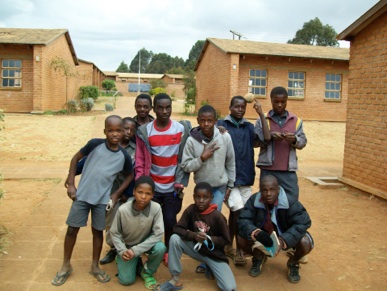
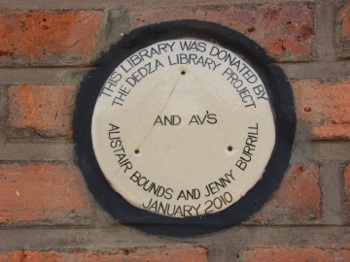
Originally, there were only three volunteers in the school, but due to changes in circumstances and the gap-year organisation, Africa Venture, having to pull out of one school, that number increased to five. We were living in a house with no electricity, a communal well shared with around five other houses and a dirt floor, which, although basic, was a fantastic home for three months.
Our neighbours were very friendly and I made close friends with one boy in particular, Ephraim, a 17 year old who would often come to me for help with mathematics homework and taught us a lot about Malawian way of life and about Dedza.
In the Malawian education system, the first four years of primary school are taught in Chichewa, the national language, and the next four years taught in English. Three of the volunteers taught Standard 6, whilst two of us taught Standard 7 classes. I taught mathematics lessons to two Standard 7 classes, giving me around 2 ½ hours of teaching a day, as well as vast amounts of marking from my classes, which had 190 children on their combined registers, although on most days each class would average around 70-80 learners.
The school day started at 7.15 am with assembly, with lessons starting at 7.30 am and continuing until 1.40 pm, with only 20 minutes of break during the day. At 1.40 pm school would finish and learners would go home for lunch. With the day finishing so early, we set up around seven after-school clubs, like mathematics, science, English, French, art, football and rounders.
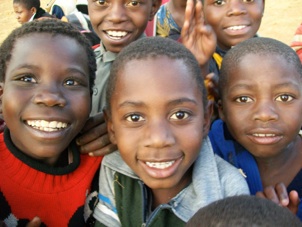
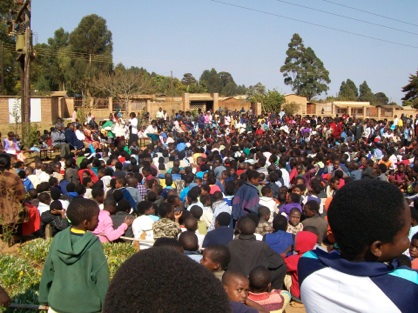
We noticed that there were some children that would consistently turn up to every club available, and were determined to learn as much as possible from the clubs that were only available when western volunteers were in the school, as most of the teachers would leave as soon as their day was finished.
With this in mind, we started looking for ways to leave a more permanent impact on the school. Many of the children were so keen to learn and better themselves, the best way out of the poverty that affects Malawi, one of the poorest countries in Africa. The nearest public library was over 150 km from the town so when the idea of building a library came up, I was very keen to pursue the idea, and started looking for quotes and talking to the school about the possibility of building a library on the school grounds.
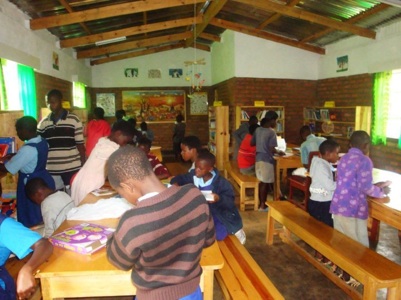
I also raised the idea with my parents, who were very supportive. I am very involved with the local church in my village and when my mother, a Sunday School teacher mentioned the project to her friend, the other Sunday School teacher, she took it to the priest who publicised it in church. The village magazine wrote about it and, through word of mouth in our tight-knit village, people started donating to the cause. A similar thing happened in one of the other volunteer’s village.
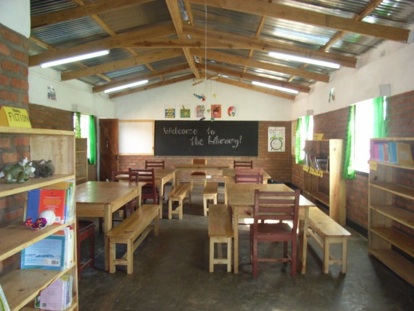
After around eight weeks at the school, we agreed a price with a contractor found through the school of K650,000, around £3,000, for the building of a 12m by 6m library on the school grounds. Africa Venture had offered £350 to the project and Monmouth School, my old school, agreed to do a Mufti Day in aid of it, raising another £350.
The other volunteer raised £1,000 from her village and my village, Shirenewton, raised £1,960 from fundraising, getting to the point where we had enough money not only pay for the basic structure, but also to add a storage room in the library and hire an electrician to fit the building with lights and electrical sockets. Additionally, a volunteer at the school in 2007 had been planning to return to Malawi and agreed to spend eight weeks from November to January in Dedza, overseeing the fitting of the library, sourcing books and showing learners how to use it.
Africa Venture was operating in 4 schools in Malawi, so we would occasionally meet up, normally at a group’s house but sometimes at Lake Malawi or in one of the big cities like Blantyre. It was fun meeting up and seeing how the other groups were getting on in their schools and also seeing new parts of Malawi. Whilst we were in Dedza, I tried to learn as much as possible about Malawi from Ephraim, our neighbour, who was very happy to talk as it gave him a chance to practice his English and learn about the UK.
He taught us how to make nsima, the main form of food in Malawi, made from maize flour and water, with a texture like raw dough, and talked a lot about Malawi, the political parties, the religious make-up of the country, and the different tribes in Malawi. We tended not to eat meat because there was nowhere other than the market to buy meat and we’d been warned about the health hazards of that meat, but we did buy some chickens and Ephraim showed me the Malawian way to kill and pluck chickens, much to the horror of the girls in the house.
By the end of the 12-week teaching secondment I felt that we had been able to make a genuine and permanent difference on the school, and that our time teaching had affected us all. The library had been started, but only to the point of building the foundations and buying building materials when we left the school. I had confidence in the Headmaster to ensure the building went smoothly and we had agreed with the him that he would contact me when each stage of the building was complete so that we could transfer the next payment for the library.