I spent 6 months living and working as an English teacher in Seva M.A Zion Basic School, based on a small island community in the Keta lagoon national park by Anyako, Volta Region, Ghana.
I chose a project in a high school because of that being the time when education can have the largest effect on a child’s prospects. I also chose an African project because my inspiration was partly because of my South African prep-school science teacher who told us her experiences teaching in rural schools with extremely limited resources. I chose a rural project (Seva’s population is below 3000) as opposed to a large town to try and build a tighter bond with my community. Despite me having faced many difficulties living and working as a teacher here, I have not regretted for a moment my year with Project Trust.
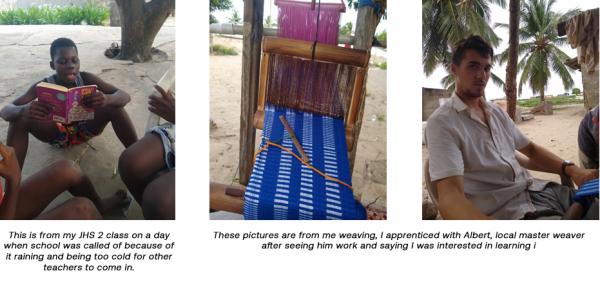
After having completed my fundraising (thanks to the support of your trust), I was sent out to my project in Volta Region, Ghana on the 14th of January 2023 after a few days’ initiation in Accra. Prior to that we attended a 5-day training course at the Project Trust Hebridean centre on Coll. The money which we had raised through fundraising contributed to the costs of flights, training, insurance, and a living allowance of £100 a month for food and necessities. The rest of the money for our own travels and anything extra we had to raise ourselves.
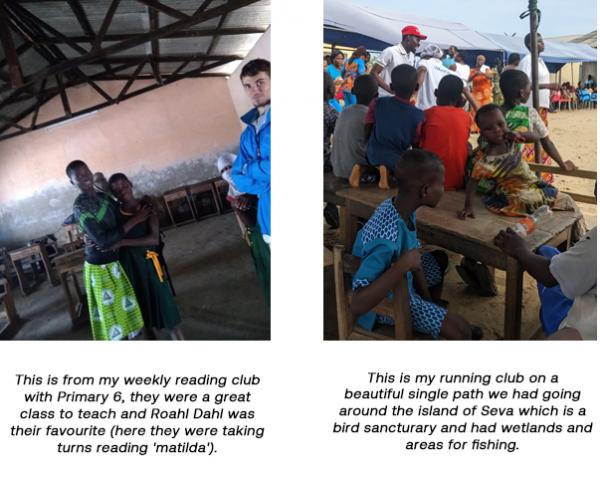
The project involved us teaching mainly English and STEM to classes from the start of upper primary (age 10) to Junior High School 2 (age 15). At the start it was slightly confusing as in our school seemed quite organised and well-endowed with teachers. However, they said they needed one full English and one ICT teacher for Junior High School, and I also was given creative art for JHS 2 and ended up teaching English to Primary 5 and 6. In total I had about 13 lessons a week split between the junior high and primary blocks of the school. I was also given the role of head of positive disciplinary techniques, and of librarian and assistant quizmaster for the biweekly intellectual quiz competition.
I faced some challenges with my teaching, not least because by the age of 15, the older students had lost their respect for teachers and sadly the love of learning that made the 12-year-old students so teachable and (generally) well- disciplined. Without using the other teachers’ main method of discipline- the cane, – which we refused for obvious reasons- there was little else we could do to make the classes learn except try our best to make the lessons interesting and rely heavily on motivational rewards like stickers.
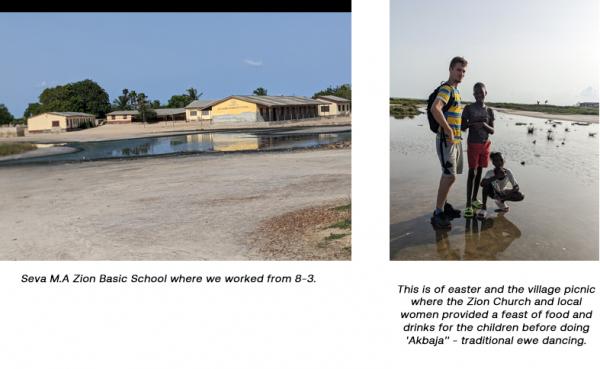
I focused on just getting the basic curriculum across to the older pupils, then extending or mentoring the gifted/weaker ones in my free periods. On a more positive note, I set up two weekly clubs for Reading and did 1 on 1 tutoring for the weakest student from my primary class. I also started clubs for judo and rugby and began a small vegetable garden in my compound for the kids to learn from.
Moreover, I greatly enjoyed my work on pupils’ art projects for CAD and the national cultural competition- I donated some art materials for their final paintings and got some of my greatest feelings of reward from it. Most importantly, what I think I left as a long-term future benefit was influencing the teaching community slightly by trying to advocate positive disciplinary techniques. Despite some of the older teachers laughing at me, the younger and more open-minded ones engaged slightly and took some of my suggested techniques on board. The headmaster was also supportive in this as he recognised indiscipline as a major problem, so he quickly agreed to my proposals to use some of the stationery and art materials I had left as rewards for hardworking pupils.
Through my role in the community, I hope I left some sort of legacy and small positive difference in their lives and education. If nothing else, I think the younger boys enjoyed having me as a role model as there are few men below the age of 60 in Seva, and I think their English improved.
On the other hand, I have doubtlessly benefitted from living here immeasurably. From the straightforward fact of having to adapt and get used to a new culture, I have developed confidence and strength for having survived and hopefully succeeded in it. Moreover, being useful and not just accepted in the community required real determination and imagination on what to spend my time doing; Engaging with the culture and language (ewe) of the local people was crucial to this. Towards the end, even doing routine jobs could feel hugely rewarding because of my level of fluency in ewe and better understanding how everything works. Doing my own washing, cooking, and managing of the house also developed me in my independence and organisation, making me more self-reliant and happier as a result. This especially applied for my travels when at times I had to organise my own transport and accommodation in Benin and Togo without really knowing the country. There, skills that I had acquired interacting and living alongside people in Ghana proved invaluable to me.
Though it certainly had its challenges, teaching almost full time for 6 months stretched and developed me both in professional capability as a teacher and for skills that I will no doubt use in the future. I have also learnt a lot from the lifestyle and wisdom of the ewe people and have developed in my values and worldview as a result. Overall, I feel privileged to have had the opportunity to throw myself into so warm and welcoming a community as Seva and get to grips with such a different and rich culture. I have thoroughly enjoyed my time living here, and without a doubt I have received far more than I have given over the last 6months.
Barney Mills.