
Dear Mr Mason,
I hope you are well. Apologies for being out of contact recently – my icloud emails will not load at all so I have not been able to access or send any emails from that account.
I am currently travelling in Vietnam after leaving Fiji on the 28th Nov, with project finishing on the 18th. Below is my report from the project.
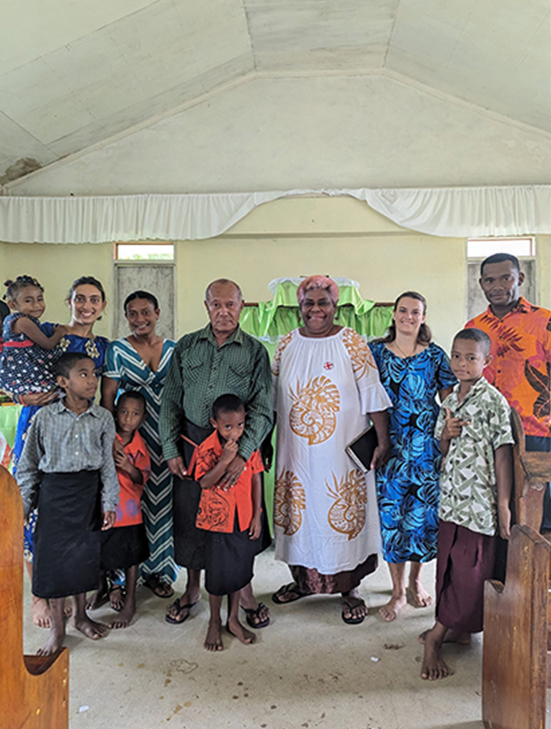
I arrived in Fiji 5 days before project was due to begin, and got to know other volunteers as they arrived day by day to the hostel we were meeting at. On 23rd Sept we started project, with the ‘briefing’. This included going to a resort on the south of the main island of Fiji, and getting to know the 12 other volunteers and 3 leaders with team building games and competitions. It also included 2 days of learning about Fijian traditions and customs, so that when we got to the village we would respect their culture and be mindful of their way of life. An example of a custom in Fijian villages is saying ‘tilou’ (pronounced chilow) when you stand above an elder who is sat down, when you pass something above someone’s head, or when you touch someone’s head. This is because in Fiji heads are sacred, and you must respect your elders in particular. Another custom is taking your shoes off as soon as you enter a house, as you must not wear shoes inside a building.
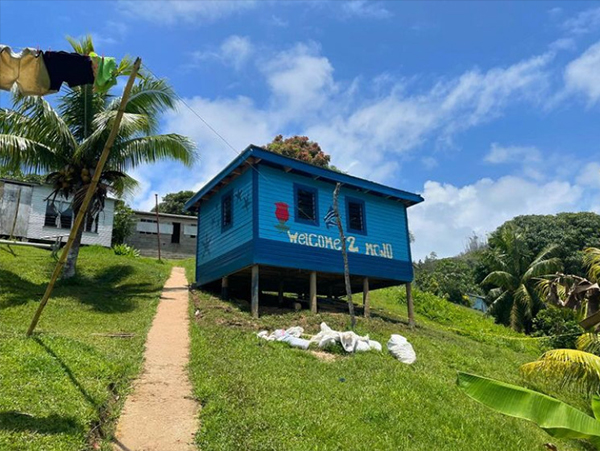
After the 4 days of briefing, we travelled to the village, which was on Kadavu (pronounced Kandavu) island. This is a fairly large island south of the mainland, and is not touristic at all. We took a boat for 4 hours to get to a port (Kavala) on Kadavu, and then took small fibreglass boats to get to the village, Matasawalevu. We all call it Majo (pronounced Macho).
When we arrived we had a ‘sevusevu’. This is where we present kava to the village and ask for permission to enter the village. Kava is a plant grown in Fiji, and Fijians harvest and dry the roots, and then grind them up, and then put the powder in a cloth and rub it in water to make a drink which looks a lot like muddy water. Kava is very important in Fiji and to enter a village you must present some. As part of the ceremony we all drank a bowl of kava (from a bowl made from a coconut) and introduced ourselves. Then we met our host families and went back to our houses.
My host family in Fiji were absolutely wonderful, and I miss them everyday. My mother was called Maraia and my father was called Tomu. My volunteer sister (Hannah) and I had 6 brothers and sisters, and 21 nieces and nephews. For the first month we lived with our parents and our sister, Lati, and her 2 kids. However in the second month we lived only with our parents, as Lati and her kids went back to her married village. During this month we would always eat with our brother, Limi, and his wife and kids, so we were never short of family in the house!
Our mother would cook every meal for us, and our father would go to the farm. They did so much for us during our time there and looked after us so well. I have never met people as generous as the Fijians. We had the only bed in the house to ourselves (despite our protests) and we had a room. There was another room that our father slept in or sometimes our siblings and nieces and nephews slept in.
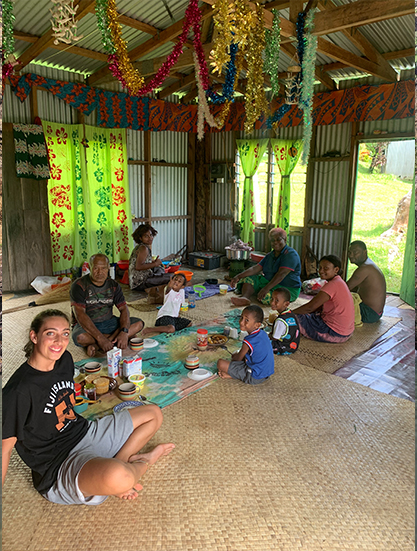
Our mother would always sleep in the main room on the floor! She said she liked it best there. Breakfast would usually be ready at 7:30am, and I would either help to make it before that, or get some much needed sleep and wake up to a delicious meal. In Fiji we always eat on a sarong on the floor, and everythjng is buffet style. For breakfast we would have a range of things, from babakau (pronounced bambacow – small triangles of fried dough) to Fijian porridge (made from cassava), or pancakes with jam.
Lunch and dinner could be anything, including friend fish, noodles with corned beef and onions, rice, Fijian pizza, cassava, pak choy, fried rice, chicken curry and more. We would always have a bunch of dishes prepared. The food was absolutely amazing in the village, and we always got told to eat, eat, eat! I could not have asked to be fed any better – the Fijians certainly know how to make a meal.
For the first month, we did ‘Youth Empowerment’. From 9-12 in the morning, we would teach sessions to twenty of the 18-35 year olds in the village. The 6 topics were Public Health, Mental Health, Environment & Climate, Leadership, Sports Development, and Business & Enterprise. We did 2 sessions on each topic. I taught the first 3 topics (as each volunteer did 3 sessions out of 12). I really enjoying teaching these as it felt like we were educating the youths on important topics, and I hoped they could use what they learnt to improve their habits and health. In the afternoons we did ‘culture course’. This was where 5 key youths from the village taught us about life in Fiji. This included weaving fans, making a ‘sasa’ (a broom made of coconut fronds), using the ‘lovo’ (traditional underground oven), and going fishing. These sessions were amazing as they taught us so much about the history and way of life in Fiji, and gave real insight into the culture. In the second month, we built a health centre.
Every day we would work pretty much all day, with a lunch break, alongside the Fijians, as one big team. We made timber frame, added walls, added floors, did the iron roof, and then painted (to put things simply).
Lunch and dinner could be anything, including friend fish, noodles with corned beef and onions, rice, Fijian pizza, cassava, pak choy, fried rice, chicken curry and more. We would always have a bunch of dishes prepared. The food was absolutely amazing in the village, and we always got told to eat, eat, eat! I could not have asked to be fed any better – the Fijians certainly know how to make a meal.
For the first month, we did ‘Youth Empowerment’. From 9-12 in the morning, we would teach sessions to twenty of the 18-35 year olds in the village. The 6 topics were Public Health, Mental Health, Environment & Climate, Leadership, Sports Development, and Business & Enterprise. We did 2 sessions on each topic. I taught the first 3 topics (as each volunteer did 3 sessions out of 12). I really enjoying teaching these as it felt like we were educating the youths on important topics, and I hoped they could use what they learnt to improve their habits and health. In the afternoons we did ‘culture course’. This was where 5 key youths from the village taught us about life in Fiji. This included weaving fans, making a ‘sasa’ (a broom made of coconut fronds), using the ‘lovo’ (traditional underground oven), and going fishing. These sessions were amazing as they taught us so much about the history and way of life in Fiji, and gave real insight into the culture. In the second month, we built a health centre.
Every day we would work pretty much all day, with a lunch break, alongside the Fijians, as one big team. We made timber frame, added walls, added floors, did the iron roof, and then painted (to put things simply).
On Sundays – the day of rest – we would go to church in the morning, and then hang out for the rest of the day. Sundays were great for catching up on sleep and spending time with family.> I have grown to love the village of Matasawalevu and its people so deeply during my time there. Sometimes there were hard bits, such as kids crying throughout the night, or lack of sleep, or being around people 24/7 and not having a private space. But it taught me so much about what makes me happy and how I want to live my life. The Fijians value family and relationships and the simple things in life more than anything, and I want to do the same. The villagers have taught me how to live a simpler life and how to appreciate the little things, rather than making my days a to-do list of goals which work towards a future. They’ve taught me how to enjoy life more and go a little slower, and how to foster more meaningful connections with people. They’ve taught me how to play, how to rest, and how to be grateful for everything that I have.
On our final night in the village, we all stayed up all night in the village hall, drinking grog and singing and dancing. It was such an amazing evening, but there was an underlying sadness. When dawn came and we knew it was soon time to be leaving, we watched the sunrise from the hill, and went to our houses. I had such a painful goodbye with my family, and with all the other villagers. I have never been so upset to leave a place or leave a group of people, and rarely have I felt such deep sadness. It was a tribute to how much I love the village. I hope to visit the village next year, as I miss it so much already, and know that I must see my family again. I am so grateful for the experience that I have had in Majo, and so grateful to Think Pacific for facilitating it. It has been the best experience of my life so far and I know that it has made me a person that I am more proud to be.
Thank you and best wishes
Kayla Roberts