
19th September 2012 to 27th February 2013
In September last year I arrived in Calcutta, or ‘Kolkata’ by the city’s new name to volunteer at Future Hope for half a year. Six months later I stood back in the airport with just one last customs officer between myself and my inevitable return to the UK. Even after the angry official considered detaining me for an overstayed VISA, I sadly left the beautiful city of Calcutta on the last day of February this year.
Before I left for India many friends and family members did their level best to helpfully inform me of what I should expect in India. I received endless warnings of how dirty everything is, how much poverty there is and how violently ill I would be. On arrival it quickly became evident of course that these things were all undeniable. Raw poverty to an extent and reality I could not have previously envisaged presented itself at every step and turn. For those first few weeks, the apparent hostility of the city consumed my thoughts.
The apartment I was staying in was just a ten-minute walk from Future Hope School, where I would be spending nearly every day of the next six months.
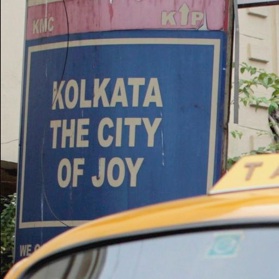
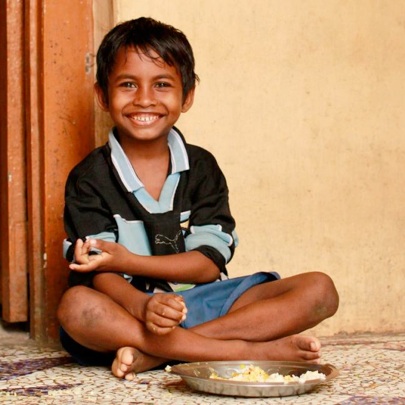
On the walk to school was a large road sign stating ‘Kolkata – The City of Joy’ opposite a small slum settlement. Every time that I passed it, I was perplexed when considering the sight of children defecating over the putrid dump crawling with rats the size of cats behind it. I passed it twice a day and each and each time I thought who, and for what reason, would want to put such a grossly inappropriate sign there.
The rich heat and thick, dirty air tired me, and it took a long time to adjust and familiarise myself to the new norms. The start of the academic year came a week after my arrival. The rich heat, rains and flooding of the monsoon ended shortly after this. The start of term saw me being introduced to children and young adults with brilliant ability, talents and personalities. The forming of friendships with these children and with staff developed fast and I soon found myself put into situations that were both very new and challenging to me.
he school day (Monday to Friday) was structured as follows: Assembly at 8am, 3x 45 minute lessons, 30 minute break, 3x 45 minute lessons, lunch, break, afternoon activities.
Although my timetable for morning developed and changed over my time at Future Hope for the most part I spent my lesson split between four areas. I spent the greatest amount of time in the ‘reading room’. Here a child from the lower classes of the school would come out of his or her lesson one by one for seven minutes of one-on-one English reading. The books were tiered according to difficulty and it was great to see the reading ability of children developing with time. Each child had a reading diary. The comments made in it were useful for logging progress and flagging up areas of weakness that could then be targeted.
For the majority of my time at Future Hope I had two 16-year old boys to tutor. For a mixture of quite complex personal reasons, as I was to learn and understand in time, they were both behind where they should have been academically. Both the boys had had time out of school and so it was decided the best option for them was to attempt to get them up to speed in Mathematics and English (which are considered very powerful subjects to hold and be strong in) whilst stopping work in other subjects. As a result of this the boys would go to the Mathematics and English lessons with their class when they had them and when the class were studying other subjects they would come to myself and the fellow volunteers for lessons targeting the topics they had both missed. I typically spent two periods a day doing this working with either one of the two boys, a similar amount of time as I spent in the reading room.
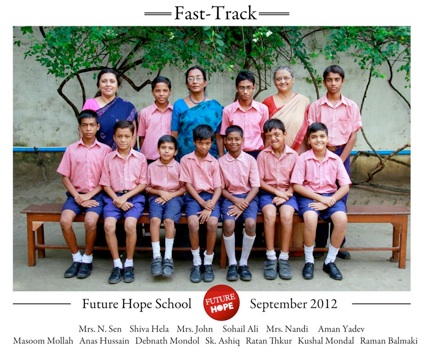
I also enjoyed spending time in ‘Fast Track’ – a class for children new to the school along with children with learning difficulties. I would often go up there in free periods and take a Mathematics, English, History or Geography lesson with one of the other volunteers.
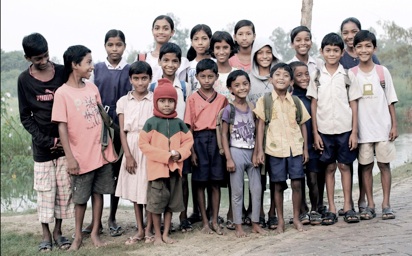
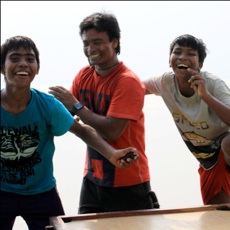
At times I assisted in science lessons with some of the older classes and also took EAL (English as an additional language) lessons with the other volunteers. The aim of the lessons was to improve spoken English with the pupils of the class. Some of the older classes had pupils of similar age, or older even than myself – an interesting challenge that I had not imagined before coming to Future Hope. These EAL lessons varied in success. It took a lot of thought to decide how to involve everyone in the class productively and for the whole lesson, especially when members of each class would vary quite significantly in ability and in their willingness to contribute.
Myself and the other volunteers would have free periods occasionally in the mornings. We were even given a volunteers staff room towards the end of my time there after a member of staff moved out of his office. Here we would attempt to hone our chess skills (which in my case needed a lot of work to be able to have anything that resembled a game with even the youngest of the Future Hope children). Often though, I would use these free periods to stay on top of non-academic related tasks I would be doing for Future Hope. My interest in photography led me to take the class photos early on in my time there. It took ages to find the names of every child in the school to foot the photographs. It was something that had not been done before. I was in close contact with the website manager, based in London, for much of my time in Calcutta. I would work with her to help provide photographs needed for the charity’s new website. I also helped the founder, Tim Grandage, taking specific photos needed for the talks and presentations that he would be giving around the world.
As mentioned, after lunch we would have afternoon activities. Most days of the week this meant for me taking sport for the young girls. We played netball for the first term and hockey in the second term. Space for sport is extremely limited at the Rowland Road site and so we often played on the roof. This led to a frantic, five-a-side football style, hockey matches. The girls enjoyed it a lot, however, and improved enormously and very quickly having their first ever match shortly after I returned to the UK. After sport there would at times be the computer lab or the library to supervise, and Tigerrr meetings to take (The Tigerrr being the newsletter of Future Hope for which the pupils write articles and which the volunteers co-ordinate and produce).
Lunch for all is eaten at school. However dinner (for the students of the Future Hope homes) is eaten in the homes and so most evenings the other volunteers and I would visit one of the five homes for dinner. Before dinner, which is eaten on the floor at the younger homes, we would help the children with homework. After dinner we would read to the children alongside the mats they slept on as they went to sleep.
As my time at Future Hope passed an understanding of some of the children’s remarkable pasts and childhoods became clearer. There were children whose parents could simply not afford to look after them and care for them appropriately; children who had run away from home after being abused and beaten; children who had been addicted to alcohol, to tobacco and to drugs; children who had been abandoned; children who had been living on the pavements and on railway platforms and children whose mothers were prostitutes.
A child would either be a ‘day scholar’ at Future Hope – meaning at the end of the school day after the afternoon activities the child would return to their family or, depending on circumstances, for lack of family or for other reasons, some children were also ‘Home students’. These students live in one of the five Future Hope homes. Genuine happiness is to be found everywhere at Rowland Road (the present heart of Future Hope) and it did not take long to spot this when first entering the site. Some things though took a little longer to notice, especially the fantastic determination of some pupils in their academic studies with public examination results being announced in which many pupils gained exceptional grades. This is also a result of good teaching and some highly intellectually talented students. Before arriving at Future Hope, I did not appreciate that when subject to malnutrition in developmental years growth can be stunted in the brain as well as in the rest of the body. I found it sad to be working with children who would never reach their full mental ability, as well as physical size, as a result of periods of malnutrition they had suffered from in the past.
A number of teenage boys and girls were invited to start rowing at a club on the lake in the south of the city whilst I was volunteering at Future Hope. Watching training on a few occasions brought home to me the immense energy that many children at Future Hope have. The children woke at 4:30 each morning in order to walk to the lake, to train and then walk the distance of several miles back to school for assembly at 8 am. Given the energy and commitment they put into this sport, it was little surprise to me that the boys coxed four won the All India Schools Regatta recently, even though they had only been rowing for less than a year.

At first, when given the odd few hours and the occasional day off, we would normally be found keeled over under a fan in a hot exhausted lump as a result of the heat and new pace of life. Quickly, however, we began to take fuller advantage of time off by exploring the city and seeing many extraordinary things. There is no better way to learn and see a city though than being shown it by people who have grown up there. I invested time in forming friendships with local people who were all keen to show me each and every far corner of Calcutta. They took me to religious festivals, temples, flower markets, their homes and even the enormous 8,586m Kanchenjunga on a brief trip made to the Himalayas over one long weekend.
As my time remaining at Future Hope and in Calcutta began to dwindle day by day, life began finally to assume an even pattern. What was at first perceived as almost hostile around me, turned to normality. I began at last to be able to consider things a little and start to collect my thoughts to a degree. I realised that I was seeing things very differently to how they appeared on my arrival. The originally shocking scenes on the walk to school that left me day in, day out wondering where next to awkwardly place my eyes were gone. Those shocked eyes were now eagerly open, sweeping the street scene along the road home each day. The same eyes now searched for the smiling faces of the people along the walk to school, none more so than those young boys who would often be seen defecating beneath that mocking sign. It was no longer mocking, just fitting. The boys would almost permanently be found playing cricket in one of the alleys off the road along which I walked home and I would be lucky to pass without a bit of enthusiastic cricket sledging in their best attempts at English.
The stew of sickly feelings in my stomach I had for months when seeing that poking sign ‘Kolkata; The City of Joy’ adjacent to the rubbish dump were gone. By the time I left the sign made complete sense. Just because the people beneath it don’t have a toilet, or potentially little of any material value it doesn’t mean they are not joyous and happy. In Calcutta joy really is found in everything. More than anything else I learnt during my time in Kolkata perhaps is that wealth does not bring with it happiness.
Of course people in poverty, such as the boys from the slum next to the sign on the walk to school remain vulnerable. The work that charities such as Future Hope do to enable children to break out of situations that can often lead into a shackling, downward spiral of health and wellbeing is of immeasurable benefit. For the children receiving it, it is genuinely life transforming. I feel hugely lucky to have been involved in such a special charity for such a period of time and I thank you now, very sincerely and warmly for your generous contributions that helped enable my stay in Calcutta and my time volunteering at Future Hope.
Although not the aim of volunteering in Calcutta, I have undoubtedly changed greatly as a result of my six months there. I have learnt many powerful lessons that I will never forget from the children of Future Hope, the staff, both academic and non-academic and the wonderful, kind and inspiring people of Calcutta itself ‘The City of Joy’. I do hope to be able to return one day in the near future.
Thank you again.
Robert Hinchley