I am sitting here looking at my blank computer and just do not know where to start. There were so many amazing and life changing experiences which I encountered in Fiji, that I would not have experienced without your financial support, that I could be writing for weeks, so summarising them is going to be a hard task.
When I flew out to Fiji in April I was, of course unsure what to expect. I had seen pictures of the scenery and had familiarised myself of the project I was about to embark on, but little did I realise that I was about to immerse myself with amazing people, children, culture, language and way of life that is so far different from ours that trying to assume and imagine would never do this magical place justice.
When we first arrived we spent a couple of days on a castaway island, getting to know our project leaders and our fellow volunteers. We prepared ourselves for the unique life that awaited us in Nasesara village on Moturiki Island. We were given a very inspiring presentation from the Think Pacific Fijian project partners from the Fijian Ministry, the Lomaiviti Provincial Council, the National Health Promotion Council and also the British High Commission, about the long term development aims in Fiji, the impact the project will make, and thanking us for choosing to volunteer in Fiji on our gap years. Afterwards everyone was fired up and bursting to get to Nasesara Village to begin their volunteer roles. The following day we were all loaded into small boats and took the short journey from Caquali Island across to Moturiki Island. From this moment on we left ourselves and were stepping into the most important and rewarding volunteer roles that were expected from us to make a difference to the lives of the Fijian people in Nasesara village and the rest of Moturiki Island in the short ten weeks we were living on their soil. The village had great expectations for our project team and wanted to welcome us with the greatest honour a village can bestow upon a visitor, a custom that is usually only ever reserved for high chiefs called The Cere. We had been told that this would be planned for our teamʼs arrival and no one could quite believe it. It is one of the most unique Fijian customs. No Think Pacific team or staff member had ever experienced a Cere before. It is so rare that villagers from far and wide visited Nasesara for the day to observe the ceremony.
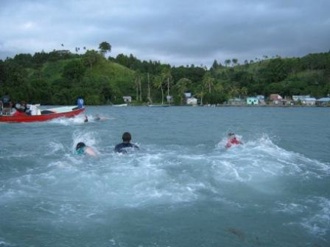
As we came through the Moturiki channel towards the village by small boats, we heard the conch being blown by two men, dressed in the traditional Fijian dress. With the conch sounding, the TP guys, as per custom, immediately jumped out of the boats into the sea. Every man for himself then swims as fast as they can for shore, knowing that the first to reach the beach would follow the conch and be led to a Fijian lady with a tabua, a whale’s tooth, one of the most traditional and coveted gifts to be offered in Fiji. James, one of my teammates claimed the tabua, which was a very special moment for him! Everyone appreciated the enormity of the occasion and was looking forward to repaying the unbelievable gesture and welcome to the people and island we can now call our families and home. After the Cere was completed the team went into the shed and took part in an extremely traditional sevusevu; again this is something seen very rarely in Fiji and something that we all truly appreciated. There were welcome speeches from the community and the Fijian Affairs Board. Then our names were called out and our host families stood forward and whisked us away to their houses were we where going to be living.
We were given a day to adjust to the Fijian way of life, which gave us a chance to prepare and go through the building plans that were to extend the community hall, to build a kindergarten, and also replace the collapsed bridge that crossed the creek, which was the only way for the children to get to school. We then had our personal project planning discussions with our leaders to make them aware of the areas of the project we wanted to focus on and any ideas that we wanted to put to the table. We were all set and ready to rock for a big first day on the project the following day.
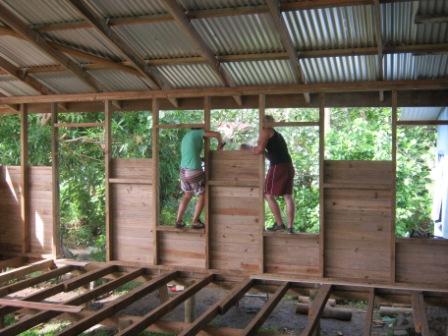
The project was split into three parts. The build, teaching in the school and taking Kindi, and then every afternoon all the volunteers would come together to become PE teachers and teach all of the school children various sports. The 18 volunteers were split between these three parts of the project and then according to the rotas we were given, every two weeks we would change to a different part of the project. At any one time there would be four teachers, five leaders in kindi and the remaining nine volunteers would be on the build project. My personal rota was, four weeks on the build project, then I moved to two weeks in kindi, and then my last two weeks on project were teaching the whole of class four in M.D.S, Moturiki District School. One of the two schools on the whole of the island, MDS, was the bigger primary school that children attended from the seven villages that are on the Moturiki Island. There is no secondary school for the children on the island, so the children would leave their families to go to the main islands, for further education if they wanted.
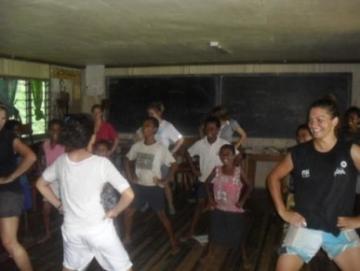
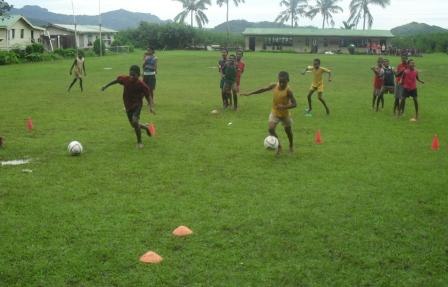
A typical day on project would start with a Morning Briefing at 8:00am, when we would discuss our plans for the day and the forthcoming week. 8:30am would be the start of the project. If your rota was to build, you would then start building. For the teachers and leaders in kindi, you would walk with the school children to school, which was three villages away from Nasesara, along a beautiful coastal path, which would take about 15 minutes.
The teachers would then go to their classrooms and plan or join in the morning assembly. The kindi would be in full swing entertaining the small children with games before the official starting time, 9 am. All the projects would stop for lunch at 12 o’clock, the teachers would have a packed lunch provided for them by their families, and the volunteers in kindi would have finished and walked back to the village and have lunch with their families, while the people on build would also eat in our village. After the 1hr break for lunch the kindi crew would join up with the builders and crack on with the build and then the build would finish for the day at around 2.30 pm and then we would all head over to the school ready and raring for the sports. Meanwhile the teachers would be taking their afternoon lessons that would finish at 3 pm ready for the sports to commence at 3.15 pm.
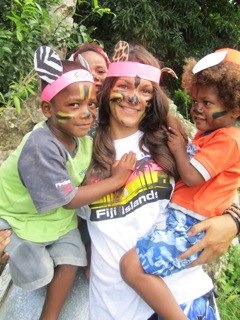
After the sports coaching was finished the TP team would either have sport training themselves or play a short team sport before our debrief at 6:00pm, where we discussed the days events and our evening program. Most evenings we had planned fun events for all the children in the village to join in with, which mostly involved singing and dancing. We all got involved in mat weaving, and bee-low making, (coconut shell sculpturing.) The Fijian women loved showing us their customs of ways of cooking, cleaning and tidying their houses. With all of us having keen enthusiasm in indulging in their ʻway of lifeʼ it was maintaining the traditional knowledge and practices. I felt that this was one of the many main roles of being on the island as so many traditions and real culture is lost from countries as they become more westernised and lose their real identity. With us being there and involving ourselves in their traditions we were really preserving their incredible culture and ʻwaysʼ.
Throughout our time working on the project, all the volunteers were involved in special group committees. We had an entertainments committee, a young enterprise committee, and an environment and health committee, all with different initiatives to be achieved. I joined the environment and health committee, as I really wanted to teach and make all the children in the school aware of particular issues. One week was set aside for our committee to go and make a difference to the children in MDS. Every afternoon we would take a different year group and teach them of particular issues that were relevant to their ages. Without TP volunteers being here, the children of the school would have no advice on any environment or health issues. In a way we were acting like Personal Health and Social Education teachers and this reminded me of when I was younger and being taught myself. Our committee had many meetings and planning sessions beforehand so we could involve the children in fun activities that would enforce our subjects. For example, we brought a bar of soap, and one activity was teaching the young children how to wash their hands properly, as it was surprising that they had never been taught before. So we had all the children washing their hands outside. When we went into kindi, we showed the children how to brush their teeth properly, and we supplied them with toothpaste, as many of the children and Fijian families could not afford any toothpaste, and they do not have dentist
check-ups like we do. With the older kids we covered topics like sexual health and puberty, and had re cap tests. It was rewarding seeing how much the children had learnt from us.
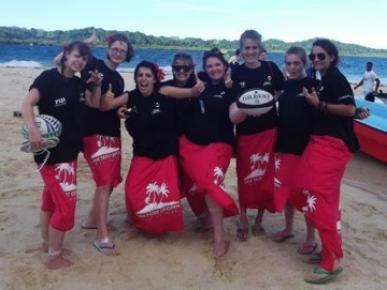
The young enterprise committee also had a really successful week, where they split the older years into groups and had to think of ideas for a small business between them. They were allocated some initial starting costs and then had to buy any materials needed, and then sell their products. The teams then could split any profit made between them. One group decided to make and sell cakes, so at the rugby fixture on one of the weekends all the children were using their best selling techniques to sell their cakes and advertise.
Another group decided to hand make jewellery, and sell it and so on. At the end of the week, all the business groups had to do a presentation in front of the whole school on their achievements and success, and faced a panel of judges, the TP leaders, who grilled them with business questions, and a winning group was chosen. In these small schools there are no extra curriculum activities or lessons on some of these important topics for the children, so without us being there the children would never even experience any of these subjects, so life expiring ambitions would not be created. So to say that we benefitted the children would be a huge understatement.
The entertainment committee had fun organising fundraisers for the village and the school, and an opening fate for our new kindergarten that we built. These events brought together the whole village and many memories were made that will never be forgotten. We had a human auction, where some volunteers auctioned themselves off to someone for a week, and then had to abide by their demands, like washing all their clothes, and cleaning all the dishes every night. All the TP guys decided that if a certain amount of money was raised then they would all shave one limb. It was soon clear that the fundraiser had made the amount the guys had agreed on, so all the girls ended up shaving a leg or arm for the guys. We raised over $200 Fijian dollars which is a huge sum of money for the village and school, that Fijians would not even dream of achieving without our support.
We always had plenty to be organising and planning, there was never a dull moment, from when we stepped foot on to the island to second we left, two months later. We arranged a TP youth camp for the children to come to over their Easter break where we had arts and crafts sessions for them, and we introduced zumba and dance classes for the girls, while the majority of the boys, wanted to improve their rugby skills with the occasional keen boy dancer. Towards the end of the project we had a house shout competition for all the children. We were put into houses and we were left to decide on a song to teach to our houses, and then we would perform it on the last day. I was in a house called Kikau and due to my competitive spirit I was determined to lead the house to victory, which we achieved. We sang ʻWaka Wakaʼ by Shikira, and ʻWe will rock youʼ. The children had great fun in learning and performing the songs.
Without Think Pacific projects playing an active role in MDS, the children would not be as enriched as they are today. We helped them in so many ways and the Headmaster is always grateful for the support and help he gets from the TP projects that go out there. Without TP the children would not play any sport at all as they have no PE teachers, and seeing, playing and experiencing the huge potential these kids have in various sports is incredible. It made me realise how lucky English kids are to be able to get involved in so many sports at schools with regular competitions. These Fijian kids could only dream of what we have over here, and if they had the sports infrastructure and coaching that English children receive they would rocket past children of the same age as them on the sports ladder to success due to their natural physical ability and passion that they have already built inside them. We organised matches for them between the other school on the island, and this was an amazing experience for them, as they had never played against anyone else apart from their fellow schoolmates. The girls’ netball team that I helped coached, played amazingly and won.
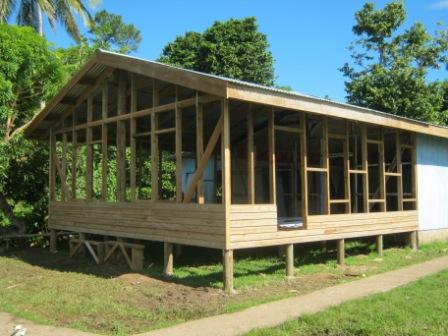
Improving vital local infrastructure is one of Think Pacific aims, and building the kindergarten for the kids in the village has been one of the most rewarding experiences I have taken part in. The bridge was incredible too, and slowly seeing this building being erected over the weeks was breathtaking. Before I went out, I had never held a hammer or saw in my life, I can safely say that I now have knowledge in this field and I am looking forward to my next encounter with such tools. I definitely shed buckets of sweat, and in my particular case, on more than one occasion, blood, on the build project. I loved every second in helping on the build that the team leaders recognised my enthusiasm and I was awarded the building project award at the end of the project.
Without our help the kids did not have a decent building to have kindi, where the beginning of their education starts. Before we came to the village, it was taken in the corner of their community hall, with limited space and materials. Leaving the village with a kindergarten that we have provided them feels incredible and I know the kids cannot wait to start their learning in the new building. All the villagers used this particular river crossing where we re built them a stable bridge. The bridge had collapsed years ago and they were currently using a metal plank to walk across, when the tide was high the sea would cover the plank but everyone would still have to walk across it as it was the only access to the walk path to the school, as the village had insufficient funds to build a new one. Each day walking back from school and seeing the bridge being improved was warming, and knowing we provided this new luxury for them. It felt even more worthwhile that the bridge had been paid for voluntary, out of the money we paid for the project and knowing it was going towards an essential cause that enriched all the villagers lives.
Again words cannot describe how grateful I am for the scholarship I was awarded from you, and you made this voluntary trip possible for me. I have learnt so much about myself and have pushed myself in so many ways beyond my comfort zone, for example taking a class of twenty Fijian children that are not fluent in English and trying to engage and teach them in various subjects with no qualified teacher or syllabus to follow. It is you, your imagination and the class, and that has left me with amazing experiences that will be cherished for life. Think Pacific is a small and personal company set out to achieve incredible goals for underprivileged communities. It has not only made a huge difference to my life but also to the lives of so many others, as Think Pacific really does make a difference.
Thanks again,